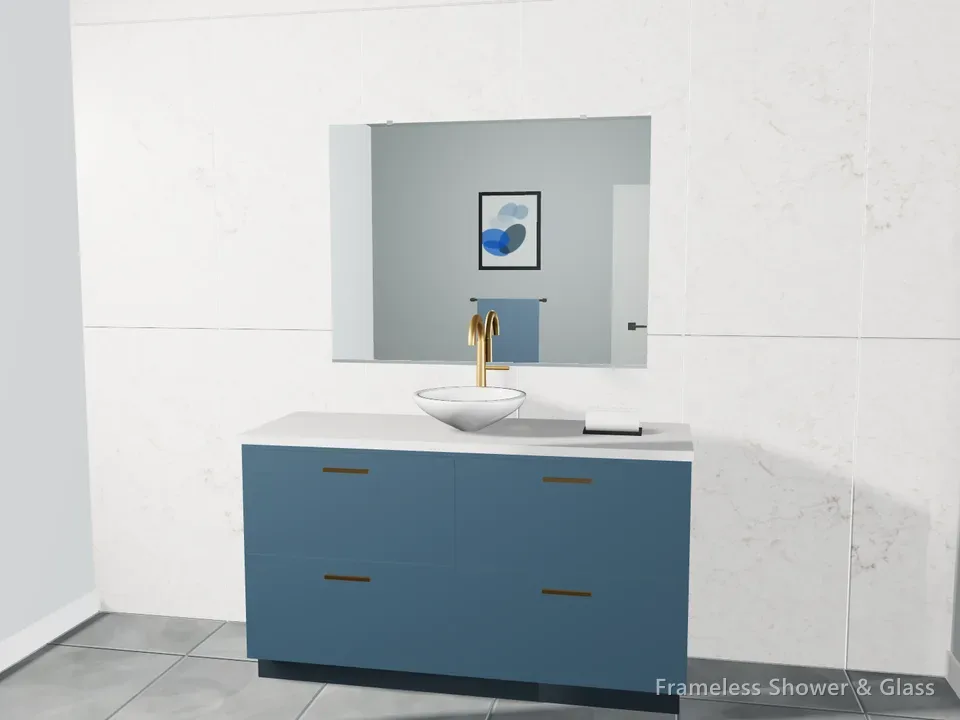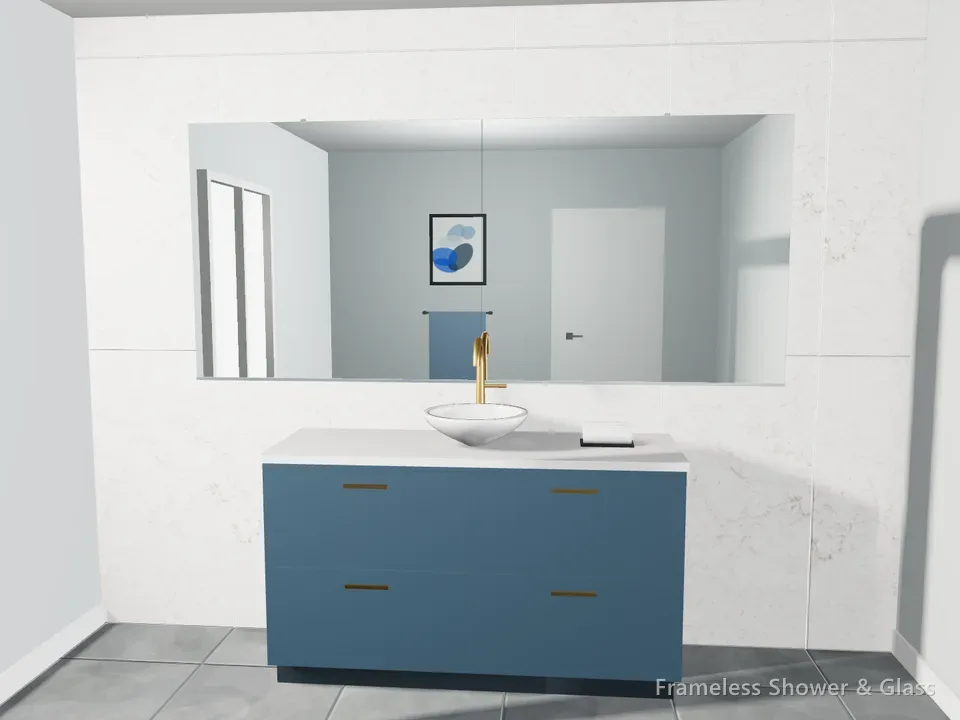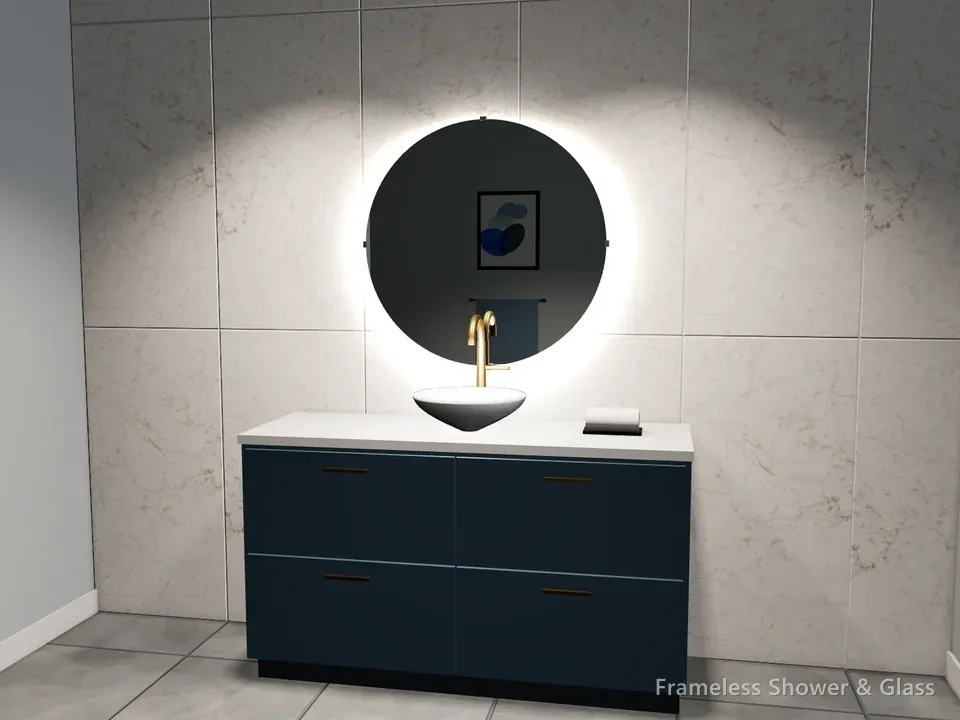
Mirror wall tiles
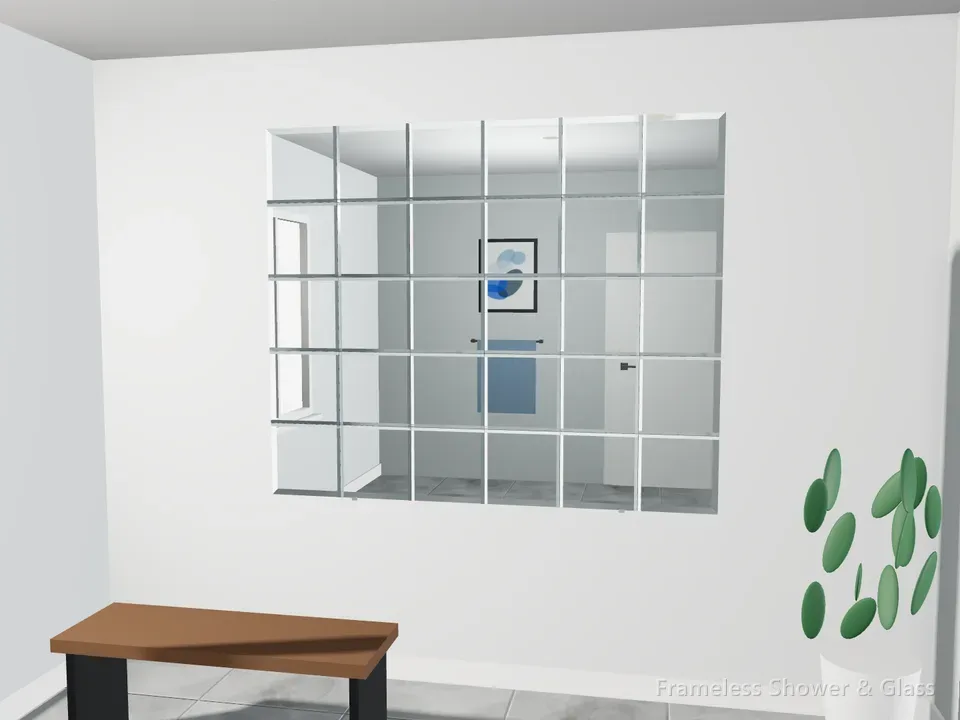
Mirror tiles break a big wall into a grid. Beveled tiles catch light at every joint; antique or bronze tiles give a vintage look. Pick the tile size and tint on the 3D wall.
Tile sizes
Squares of 12, 16 or 24 in in the designer. Other sizes and rectangles can be cut.
Edges
A bevel on every tile makes the grid read from across the room; a flat polish keeps it quiet.
Set on the wall
Tiles are set with mirror mastic made for silvered glass, on a flat wall.
More ways to do it
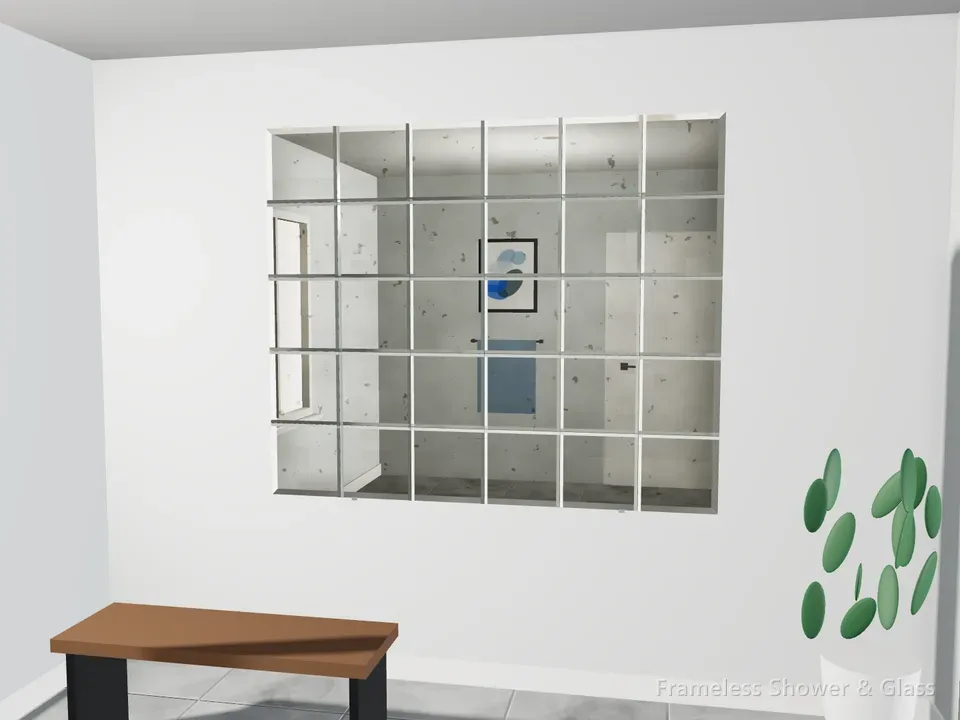
Antique tiles
Open this design on the 3D wall.
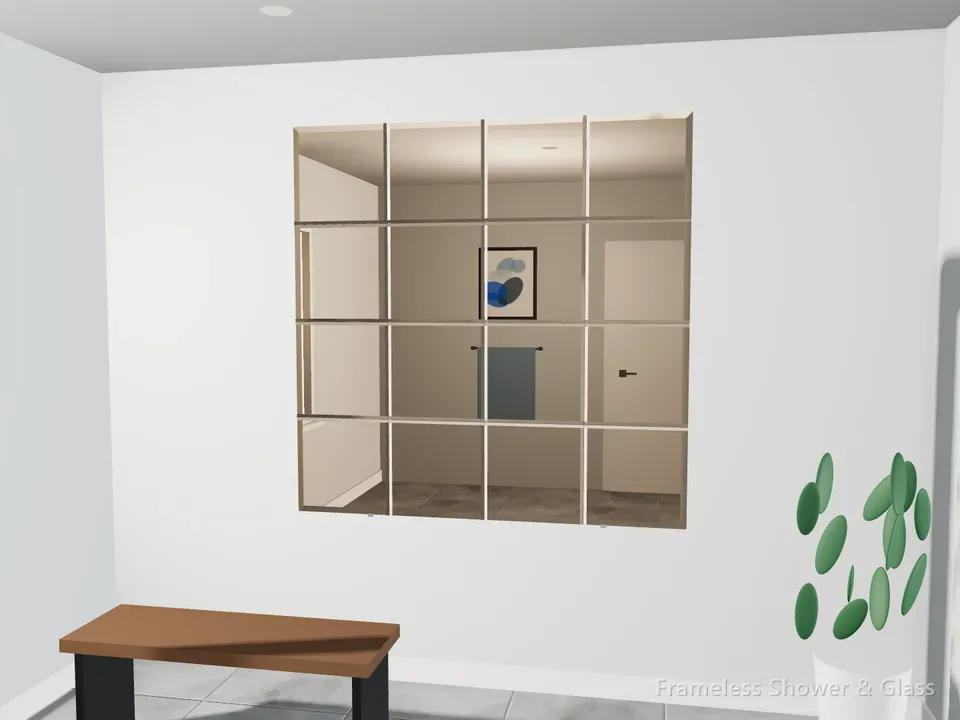
Bronze tiles, 16 in
Open this design on the 3D wall.
How it works
Design it in 3D
Pick the shape, size, edge, mirror tint and lighting on the live 3D wall. Send it to us with one tap, or text a photo of the wall.
We measure
We measure the wall on site: the opening, outlets and switches, the vanity, and whether the wall is flat and plumb.
We cut and finish
The mirror is cut to those measurements, the edge is polished, beveled or penciled, and cutouts and backing are added.
We install
We mount it with the clips, channel, mastic or standoffs you chose. For LED and anti-fog mirrors, we tell you at the measure what power the wall needs behind the mirror.
Questions
Can you cut a mirror to any size?
We cut mirrors to the size of your wall or vanity, measured on site. Very large walls are made from more than one panel, joined with a tight polished seam.
What is the difference between a beveled and a polished edge?
A polished edge is ground square and smooth. A beveled edge is ground at a shallow angle about an inch wide around the face, which catches light and frames the mirror.
What is low-iron mirror?
Mirror made on low-iron (ultra-clear) glass. Regular glass has a faint green tint that shows most in white rooms and at the edge; low-iron reflects colours more truly.