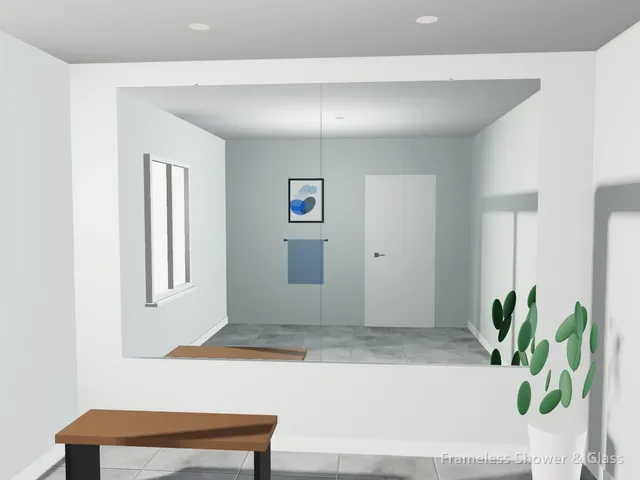
Hinged, sliding or pivot shower door?
How a glass door opens decides what it hangs on, how much room it needs in front of the shower, and where the water goes. Watch each one open from above.
Three ways to open
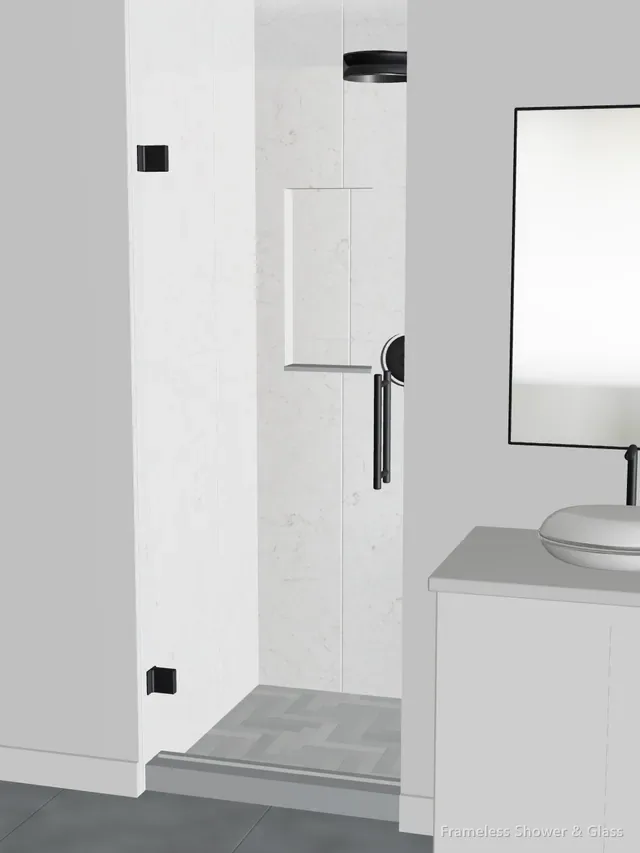
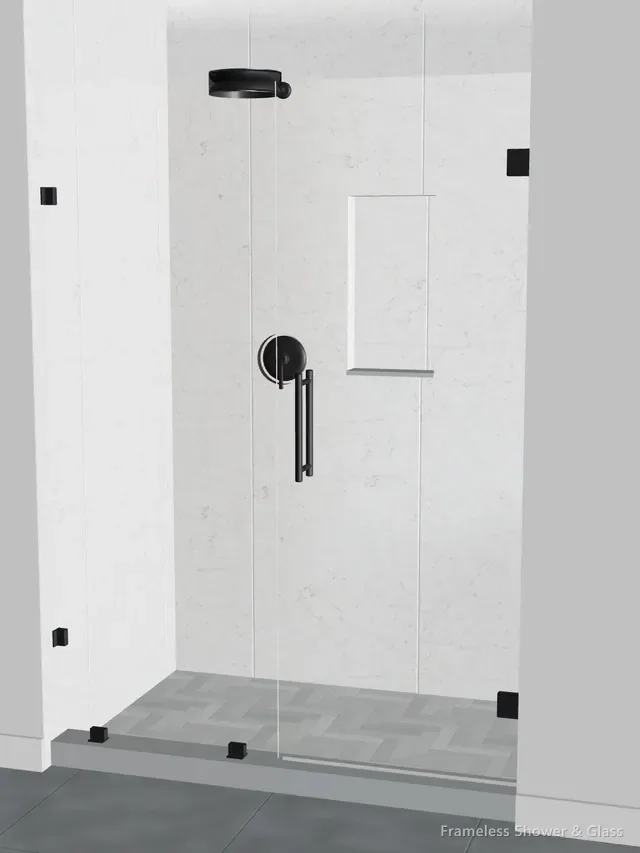
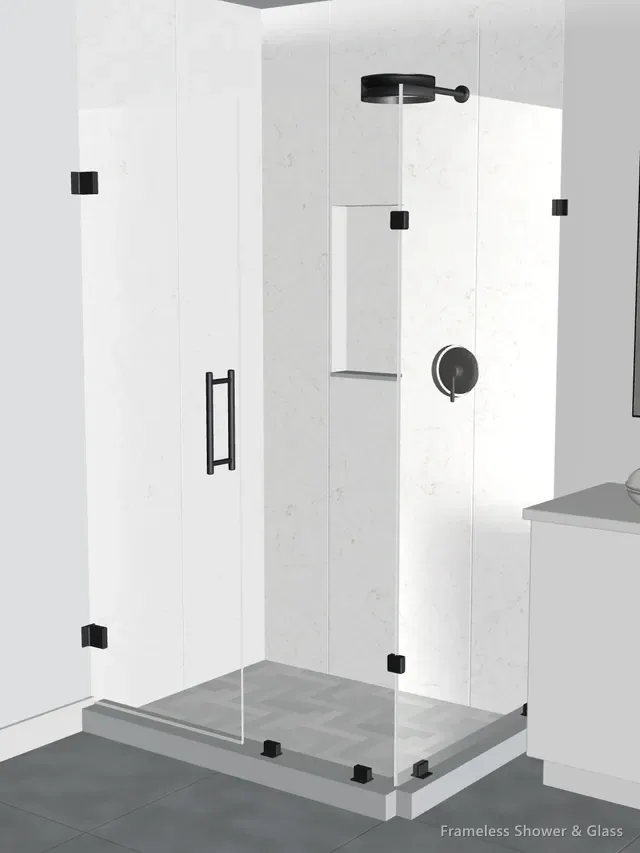
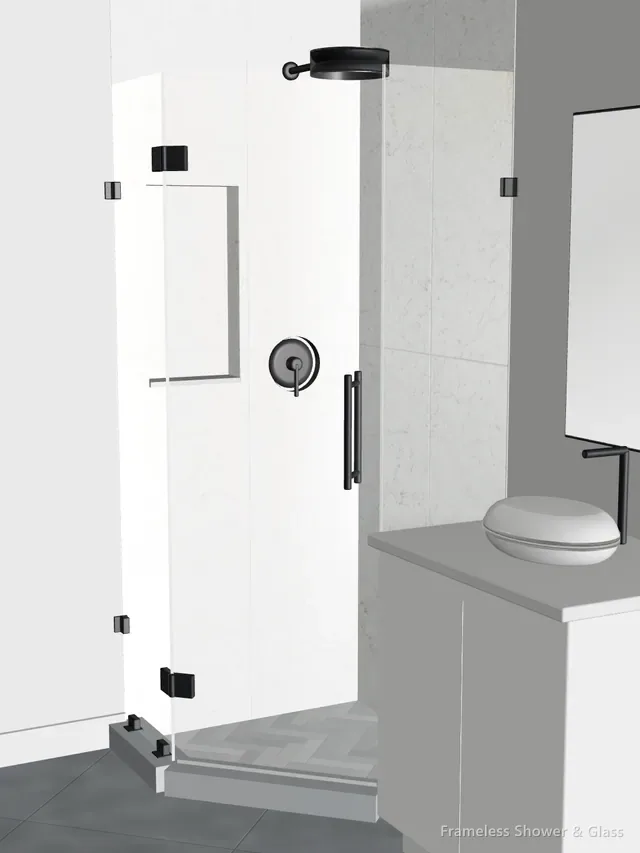
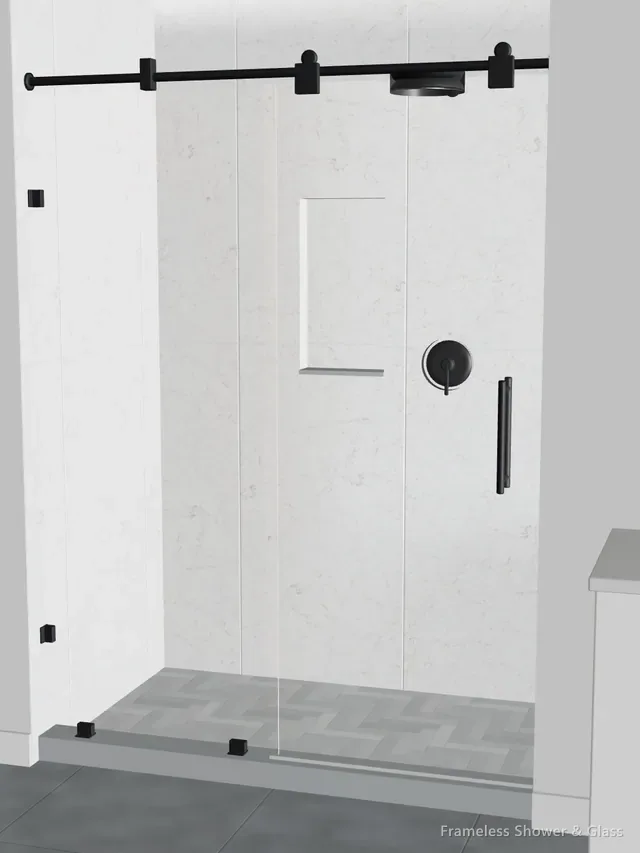
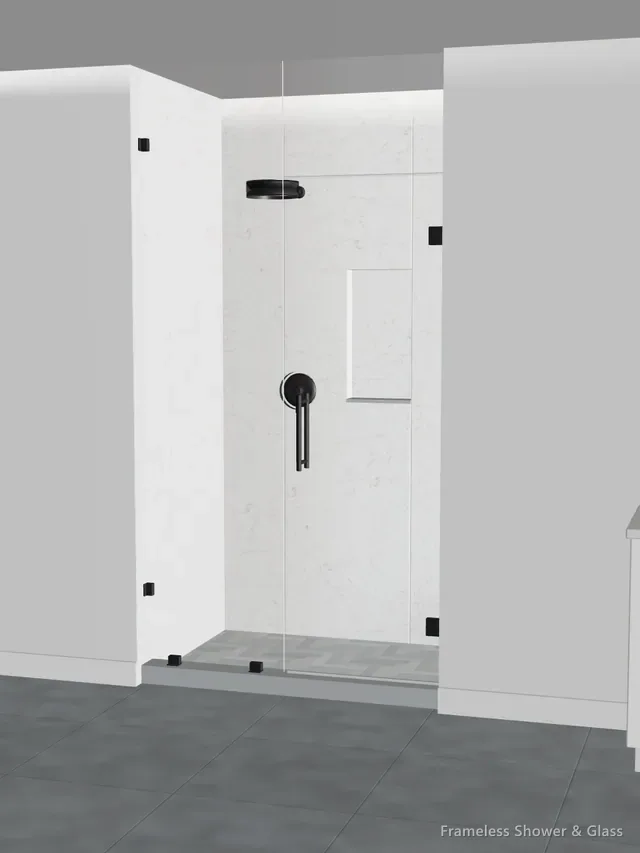
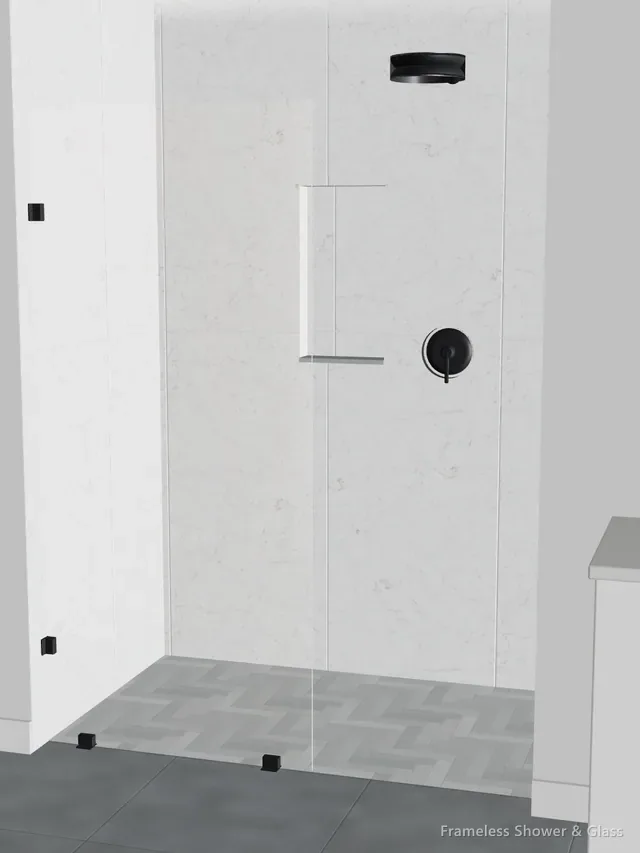
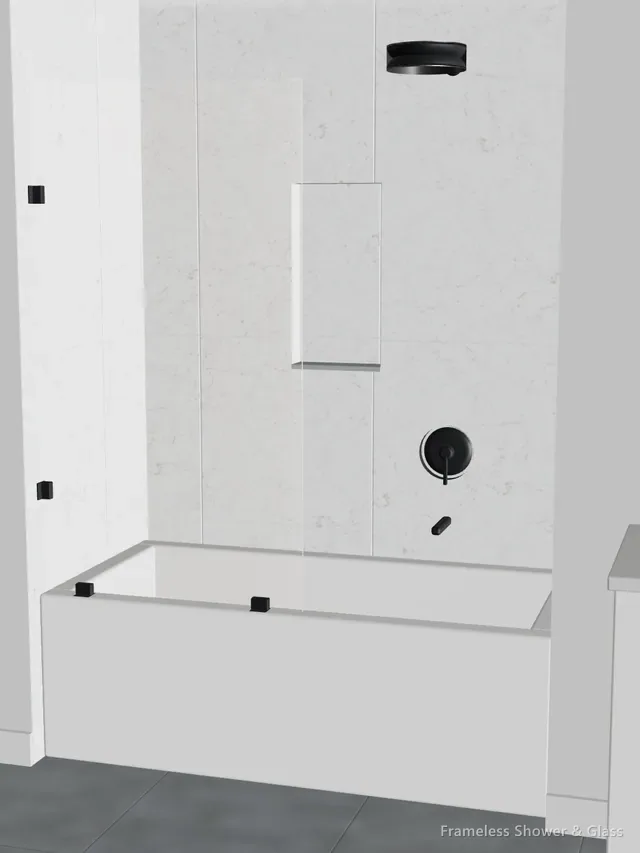
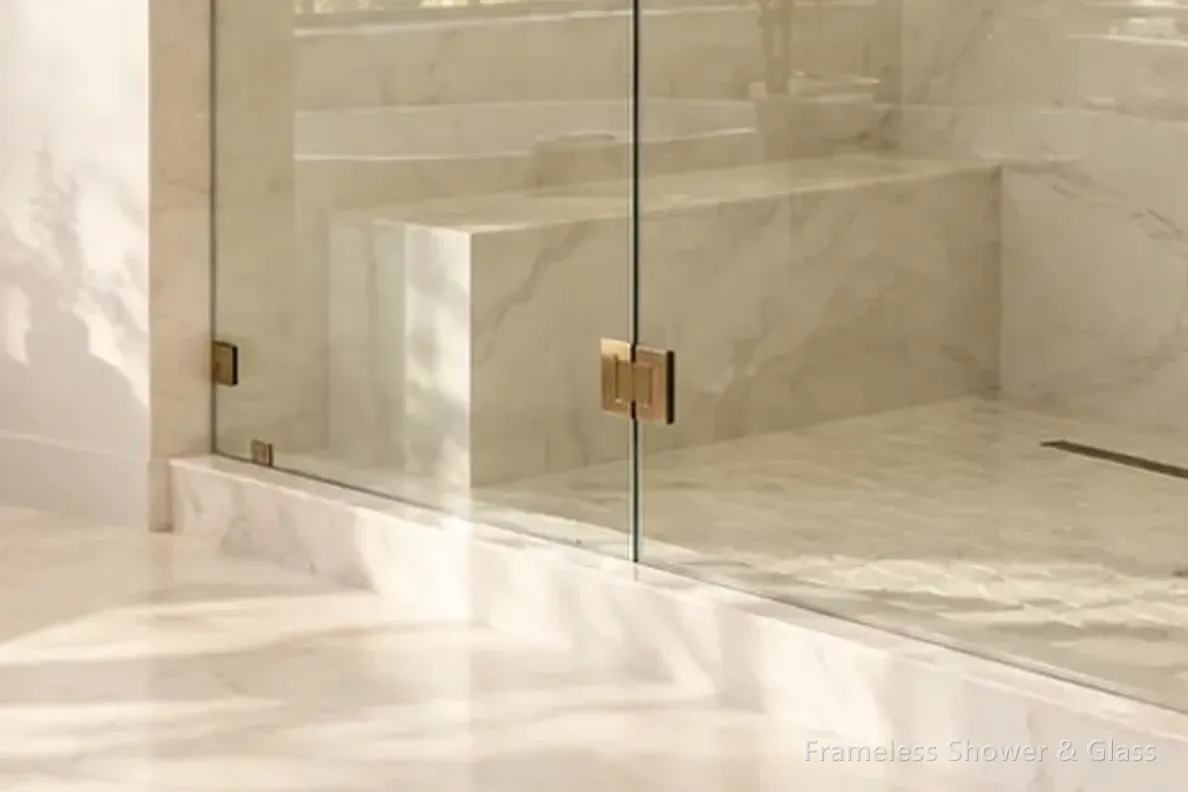
A hinged door hangs on hinges fixed to the wall or to a fixed glass panel, and swings out. A pivot door turns on pins at the top and bottom instead of hanging off a side hinge, which suits wider or heavier doors. A sliding door rolls along a bar past a fixed panel and never swings.
Try it: watch each one open
Why a hinged door swings out
A hinged shower door opens out into the bathroom, not into the shower. The residential code generally requires hinged shower doors to open outward, so someone can reach a person who falls inside. Local adoption varies.
So the space in front of the shower matters as much as the shower itself. Check yours:
Sliding: no swing at all
A frameless slider rolls on an exposed bar, so it needs no room in front. It suits tight bathrooms where a swinging door would hit the vanity or the toilet. The door overlaps a fixed panel, so the way in is narrower than the glass.
Try it: turn it in 3D
Where the water goes
Every door leaves small gaps so it can move. Whichever type you choose, a door placed away from the shower head keeps the most water in.
Try it: move the door
Short answers
Why does a shower door open outward?
The residential code generally requires hinged shower doors to open outward, so someone can reach a person who falls inside. Local adoption varies.
Is a sliding door better in a small bathroom?
Often, because it needs no room to swing. Use the swing check on this page with your own door width and the space in front of the shower.
Get a free quote
Anything you tried on this page goes with it as your design. Or open it in the 3D studio first.